You have been told to try laser. You have read about microneedling. You have seen the term MNRF appear everywhere in between. And now you are sitting with three browser tabs open, more confused than when you started.
Let us close those tabs.
MNRF is not a brand name. It is not a trend. It is one of the most effective, safest skin treatments available today, especially for Indian skin. And once you understand how it actually works, everything else becomes clear.
What MNRF Actually Is
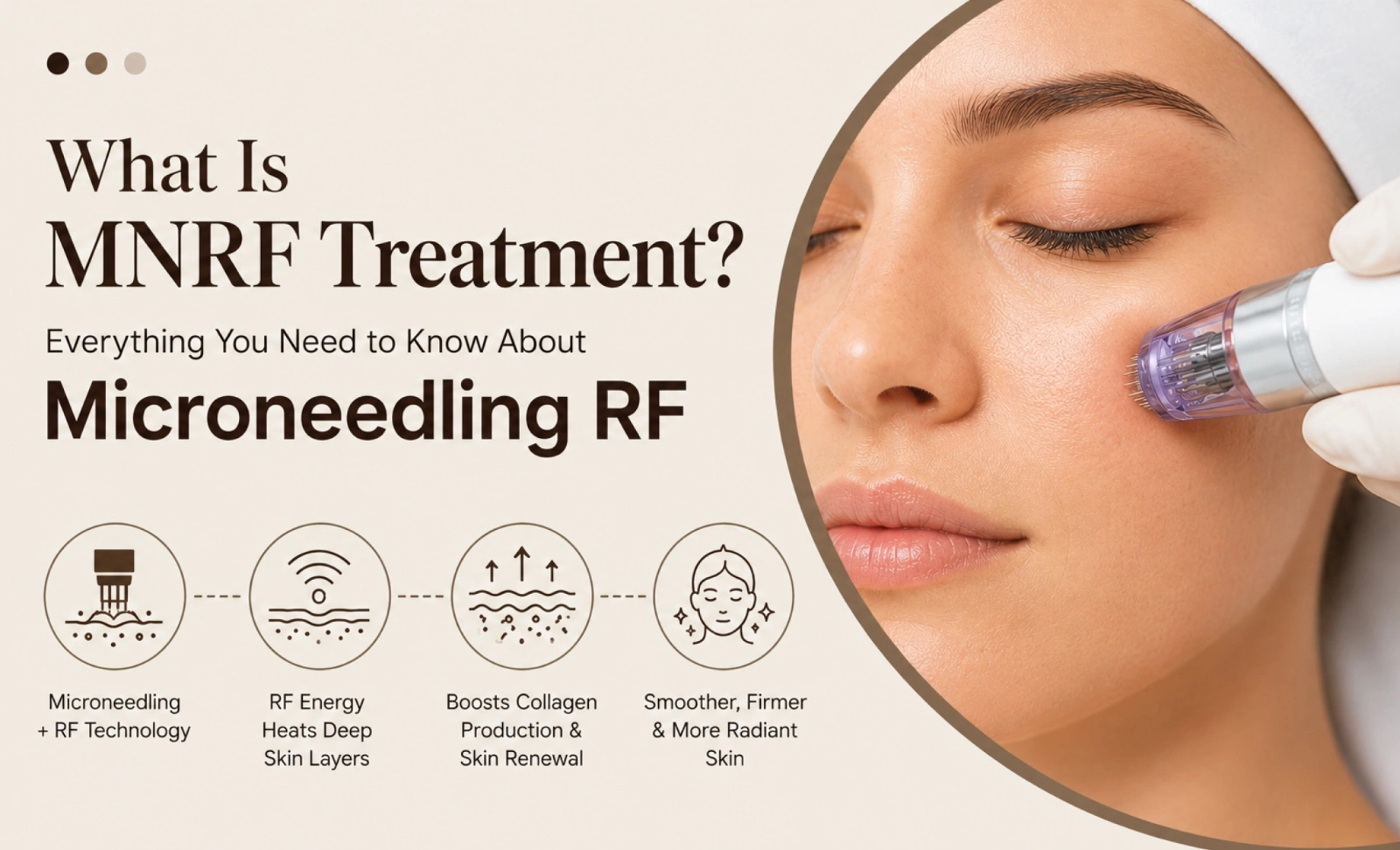
MNRF stands for Microneedling Radiofrequency. It combines two technologies into one procedure.
The first part is microneedling. Fine, controlled needles create tiny punctures in the skin. These micro-injuries trigger your skin’s natural healing response, stimulating collagen production from below.
The second part is radiofrequency. The moment those needles reach the target depth inside the skin, they emit controlled radiofrequency energy. This heat goes directly into the deeper dermis layer, where scar tissue and collagen loss actually exist. The surface of your skin, your epidermis, stays largely undisturbed.
That combination is what makes MNRF different. Two mechanisms working together. Deeper collagen rebuilding. Less surface damage. Less downtime. And significantly lower pigmentation risk compared to ablative lasers.
What MNRF Treats
This is a treatment that works across multiple skin concerns, not just one.
Acne scars, especially boxcar and rolling scars, respond very well because MNRF targets the depth at which scar tissue lives. Open pores shrink as collagen around them tightens. Fine lines and mild skin laxity improve because the radiofrequency heat contracts and rebuilds the structural tissue underneath. Stretch marks, dull skin texture, and uneven tone also respond progressively over sessions.
At Linae Clinic in Hyderabad, the most common presentations seen in consultation are patients with a combination of acne scarring, open pores, and early skin laxity. MNRF often addresses all three in the same treatment plan without needing separate procedures.
Also Read: Can Acne Scars Be Completely Removed
Why MNRF Is Particularly Good for Indian Skin
This is the part most people miss when comparing treatments.
Indian skin falls in the higher Fitzpatrick range. Melanocytes are more active in darker skin tones. When laser energy hits the skin surface aggressively, those melanocytes react and produce post-inflammatory hyperpigmentation. New dark patches. Sometimes worse than the original problem.
MNRF sidesteps this risk precisely because the radiofrequency energy is delivered inside the skin, not through its surface. The outer layer is not ablated, not vaporised, not heavily disrupted. The pigment-producing cells are left largely undisturbed.
This is why, as Dr. Praneeta Jain explains at Linae Clinic in Hyderabad, MNRF is often the smarter first-line choice for Indian patients. Not because laser is wrong, but because MNRF carries a significantly smaller margin for pigmentation error in darker skin tones.
The Procedure: What Actually Happens
A numbing cream is applied thirty to forty-five minutes before the procedure. You feel minimal discomfort during the session, mostly a warm pressure sensation as the device passes over the skin.
The session itself takes thirty to sixty minutes depending on the area being treated. The needles penetrate at precise, adjustable depths depending on your scar type and skin concern. Radiofrequency energy is delivered at the target depth. The device is moved methodically across the treatment area.
Immediately after, the skin looks flushed, like a mild sunburn. Some patients notice a subtle glow underneath the redness. That redness and mild swelling resolve within twenty-four to forty-eight hours for most people. No peeling. No open wounds. No week-long recovery.
Also Read: CO2 Laser vs Microneedling for Acne Scars
How Many Sessions and When Results Appear
Most patients need four to six sessions, spaced four to six weeks apart. The gap between sessions is not optional. It is when collagen remodelling actually happens. Rushing sessions disrupts the healing cycle and weakens results.
Results do not appear overnight. Initial texture improvement begins two to three weeks after the first session. Visible scar reduction becomes clearer from session three onward. Full collagen maturation continues for up to three to six months after the last session. The final result is often significantly better than what you see immediately after completing the course.
Maintenance sessions every six to twelve months help sustain results as natural collagen loss continues with age.
Diagnosis: Where Planning Goes Wrong
The most common failure with MNRF is not the procedure. It is the consultation before it.
A patient comes in with deep ice pick scars, rolling scars, and open pores. A generic MNRF protocol is run across all three. The rolling scars had fibrous tethering underneath that needed subcision first. The ice pick scars needed TCA CROSS before any surface remodelling could work. Neither was addressed. Four sessions later, improvement is partial. The patient concludes MNRF does not work.
That is not a treatment failure. That is a planning failure.
At Linae Clinic in Hyderabad, Dr. Praneeta Jain begins every consultation with a thorough scar and skin assessment. Scar type, depth, skin tone, active acne status, and realistic improvement timeline are evaluated before any treatment session is scheduled. MNRF is integrated into a plan, not used as the entire plan when the skin needs more.
Honest Risks
Temporary redness and sensitivity for one to two days are the most common effects. Minor pinpoint marks or very mild swelling can occur. These resolve quickly with basic aftercare including sun protection and gentle moisturising.
Pigmentation changes are possible if sun exposure is not properly managed post-session. In correctly selected patients with appropriate protocols, serious adverse effects are rare.
MNRF does not erase scars completely. It significantly reduces their visibility and improves overall skin quality. That is an honest, achievable outcome.
Why Linae Clinic in Hyderabad
This is what it means in practice:
- Skin and scar assessment done before any MNRF session is planned
- Protocols customised for Indian skin tones to minimise pigmentation risk
- Combination treatments sequenced correctly, not added as extras
- Honest session estimates based on your specific skin, not a fixed package
- Results tracked over time with follow-up at every stage
Patients at Linae Clinic in Hyderabad regularly arrive after partial results elsewhere and discover that what was missing was not the treatment. It was the plan behind it.
FAQs
Is MNRF painful?
Numbing cream is applied before every session. During the procedure, most patients feel warmth and mild pressure. It is well tolerated.
Can MNRF be combined with other treatments?
Yes, and often it should be. PRP, chemical peels, subcision, and TCA CROSS are commonly used alongside MNRF depending on scar type. Dr. Praneeta Jain plans these combinations based on individual assessment at Linae Clinic in Hyderabad.
How is MNRF different from regular microneedling?
Regular microneedling creates micro-injuries only. MNRF adds radiofrequency energy delivered into the deeper dermis, producing more significant collagen remodelling and better results for deeper concerns.
Is it safe for active acne?
Active, inflamed acne needs to be controlled before MNRF begins. MNRF can worsen inflammation if you use it to treat active breakouts. Sequencing matters.
What about cost?
At Linae Clinic in Hyderabad, session cost and total plan cost are communicated clearly in the first consultation. Pricing is transparent and based on what your skin actually needs, not a standard package.
Decide.
Your skin has been waiting long enough. MNRF is not magic. But planned correctly, for your scar type, your skin tone, your specific needs, it is one of the most effective tools available today.
Book a consultation at Linae Clinic in Hyderabad with Dr. Praneeta Jain. One proper assessment. One clear plan. Real results that last.
Good skin is not luck. It is the right decision, made at the right time.