
Hair Restoration

Restore Growth. Regain Confidence.

Hair loss can deeply affect confidence and quality of life, but it’s also highly treatable. Whether you’re noticing early thinning or advanced shedding, Linaé offers safe and effective options to help restore your hair’s natural growth cycle. Hair loss in women—whether from hormonal changes, postpartum shedding, PCOS, thyroid conditions, nutritional deficiencies, or female pattern hair loss—requires a different diagnostic and treatment approach than male hair loss. Dr. Praneeta evaluates the underlying cause thoroughly before recommending treatment.
Send Us A Message

Is This Treatment Right for You?

Consider hair restoration if you’re noticing increased hair shedding or thinning; your hairline is receding; you can see your scalp through your hair; you’ve tried supplements and oils without results; you have patchy hair loss (alopecia areata); or hair loss is affecting your confidence.

Our Hair Restoration Treatments

PRP (Platelet-Rich Plasma)

A well-known, natural treatment for early-stage hair thinning. A small amount of your blood is processed to extract growth factor-rich plasma, which is injected into the scalp to stimulate dormant follicles. Typically done once every 3–4 weeks for 4–6 sessions, followed by maintenance every 4–6 months.

GFC (Growth Factor Concentrate)

An advanced version of PRP, processed without additives to deliver a highly pure and potent dose of growth factors. Promotes stronger regrowth and better follicle activation. Usually done once every 4 weeks for 4–6 sessions.

Stromal Vascular Fraction (SVF)

Uses regenerative cells derived from your own fat tissue, rich in stem cells and growth factors. Ideal for long-term follicle stimulation and overall scalp rejuvenation. A once-a-year procedure due to its powerful, sustained effects.

Exosome Therapy

One of the latest breakthroughs in regenerative hair care. Nano-vesicles deliver cell-to-cell signals that repair and activate hair follicles. A course of 3–4 sessions spaced 4–6 weeks apart is typically recommended for visible improvement in density and thickness.

Dutasteride Scalp Injections

Blocks the DHT hormone locally—one of the primary causes of patterned hair loss. This targeted approach slows thinning and reactivates miniaturised follicles. Injections are performed once every 1–3 months.

Scalp Botox

Targets scalp tension, an often overlooked contributor to hair loss. By relaxing scalp muscles, it improves blood flow and reduces pressure on hair follicles. Done once every 4–6 months.

Intralesional Steroid Injections

Used for autoimmune-related hair loss conditions like alopecia areata, lichen planopilaris, or discoid lupus. The diluted steroid calms inflammation and helps hair regrow. Sessions repeated every 3–4 weeks until improvement.

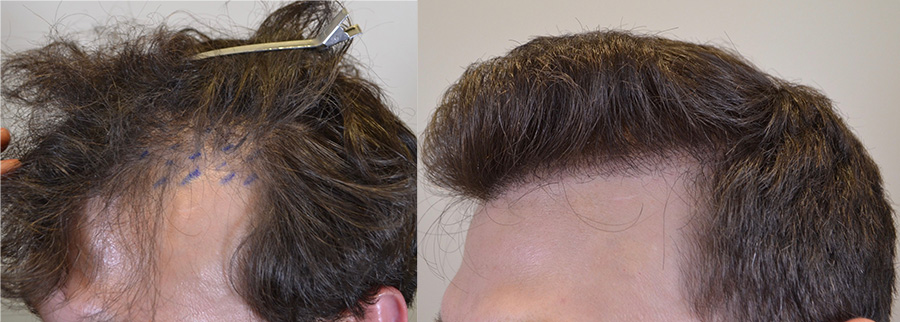
Hair Transplant Surgery (FUE)

A permanent solution for more advanced hair loss. We offer FUE (Follicular Unit Extraction) and Long Hair FUE (non-shaven) techniques. No shaving is required for Long Hair FUE. All surgeries are conducted in a fully sterile surgical suite with strict infection control protocols to ensure graft survival and optimal results.

What to Expect

Dr. Praneeta will assess your hair loss pattern, scalp health, and medical history before recommending the most appropriate treatment or combination. Most non-surgical treatments require multiple sessions to see optimal results. You’ll receive a personalised treatment timeline and realistic expectations during your consultation.

FAQ

Frequently Asked Questions​

It depends on the stage, type, and cause of your hair loss. Early thinning may respond well to PRP or GFC. More advanced loss may benefit from a combination of therapies or hair transplant surgery.

Most patients begin noticing improvement after 3–4 sessions (about 2–3 months). Full results for non-surgical treatments take 6–12 months. Hair transplant results become visible from 6 months onward.

The procedure is performed under local anaesthesia and is well-tolerated. Post-procedure discomfort is minimal and manageable with medication.