Acne is treated medically. Scars are treated by type.
The single biggest reason acne scar treatment disappoints is that every scar gets the same procedure. Ice pick, boxcar and rolling scars are different problems and need different tools.
Why the same treatment gives different results
Two people can have what looks like similar acne scarring and respond completely differently to the same laser. That is not bad luck. It is because scars are structurally different from one another, and a device that suits one type does very little for another.
Rolling scars are tethered underneath by fibrous bands, so resurfacing the surface alone barely moves them. They need those bands released. Boxcar scars have sharp walls and a flat floor and respond well to resurfacing. Ice pick scars are narrow and deep, sometimes reaching further down than any laser safely goes, and are often better managed with focal techniques.
So the first thing that happens in a scar consultation is not a treatment recommendation. It is an examination to establish which types you have, in what proportion, and how thick and how oily your skin is. Only then does the plan get built, and most faces need more than one technique in combination.
Active acne is a separate matter and comes first. There is little sense in resurfacing skin that is still breaking out, because new lesions will create new scars while old ones are being corrected. Acne is brought under control medically, then scar work begins.
What we are actually treating
Identifying the type determines which technique works, and most patients have a mix.
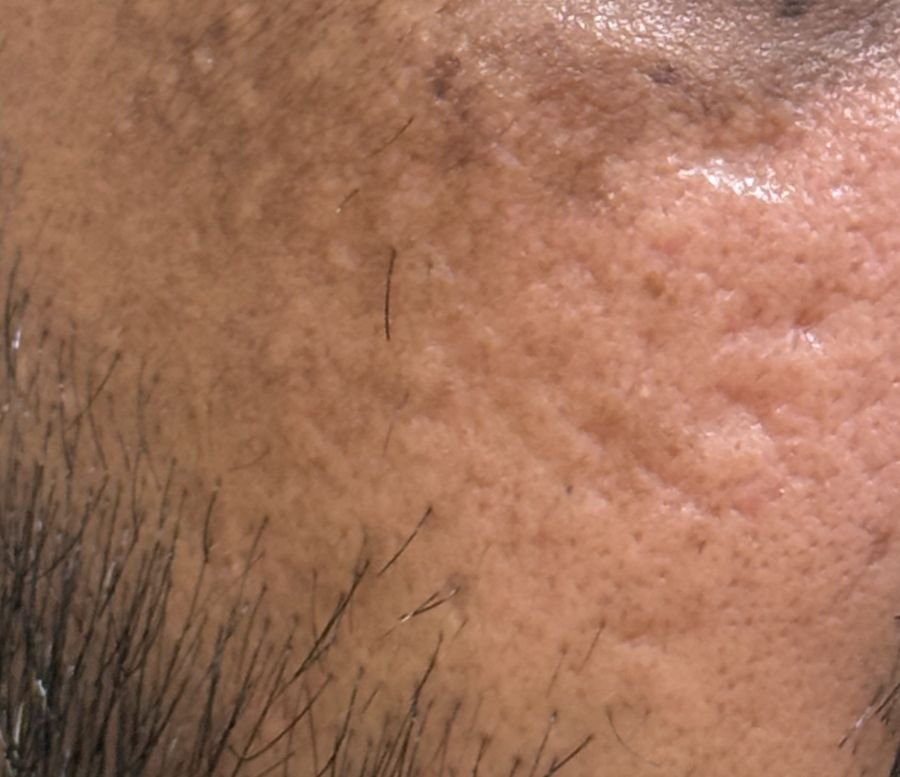
Rolling scars
Broad, shallow depressions with sloping edges, caused by fibrous bands tethering the skin to deeper tissue. Surface resurfacing alone rarely helps; releasing the tether does.
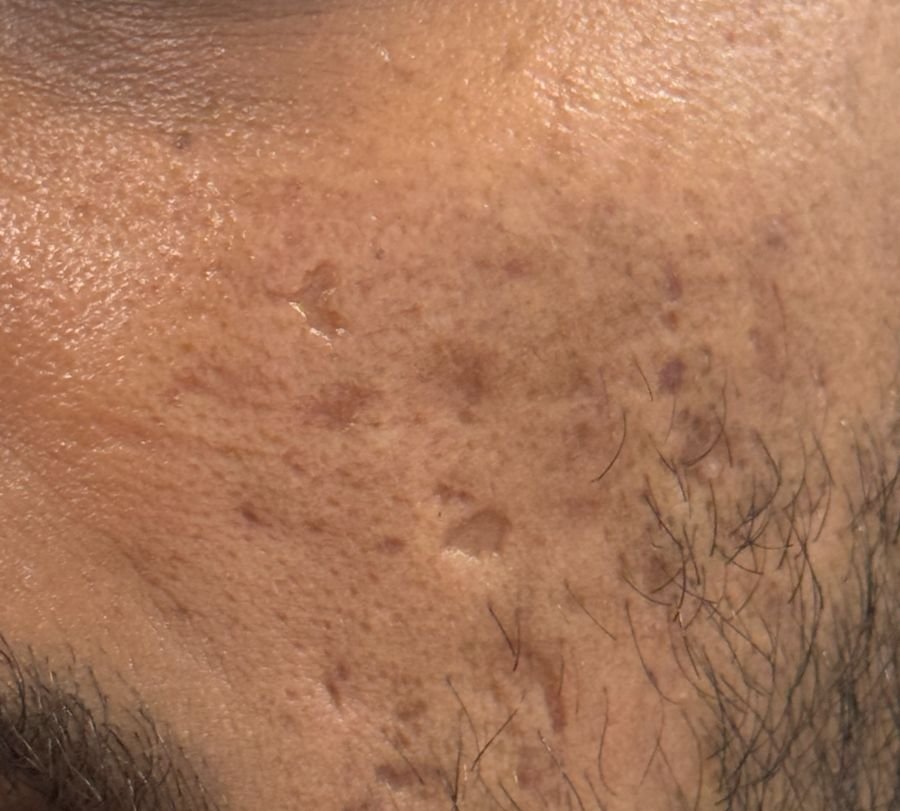
Boxcar scars
Round or oval depressions with sharply defined vertical walls. These respond well to resurfacing techniques that remodel the crater edges and stimulate collagen at the base.
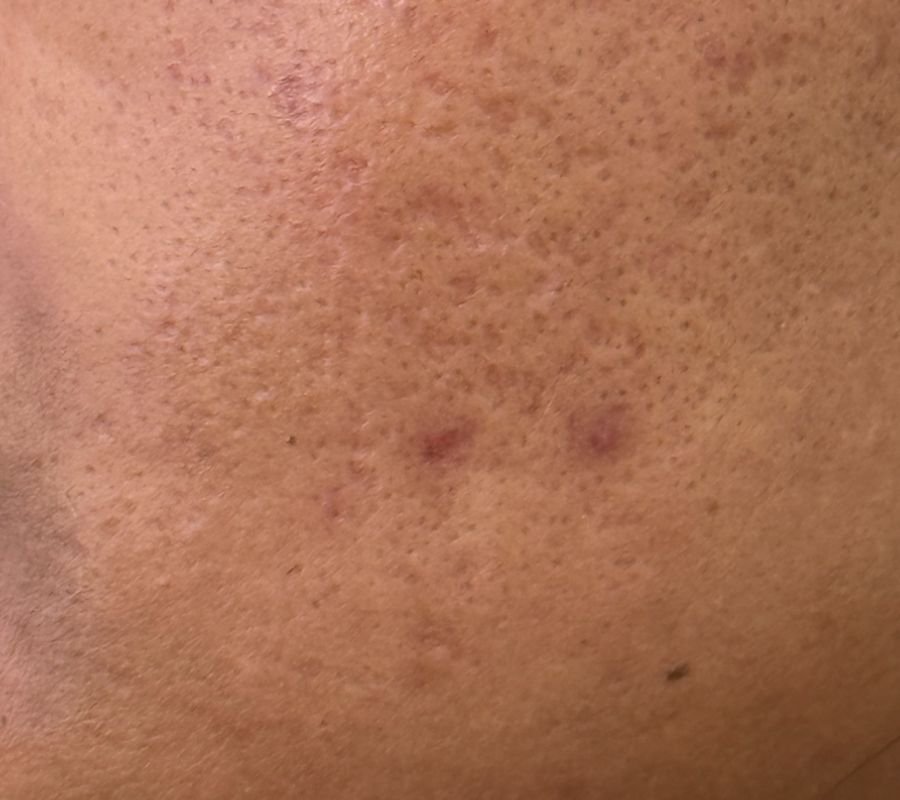
Ice pick scars
Narrow, deep, needle-like tracks that can extend well into the dermis. Too deep for resurfacing alone, so focal techniques are often more effective.
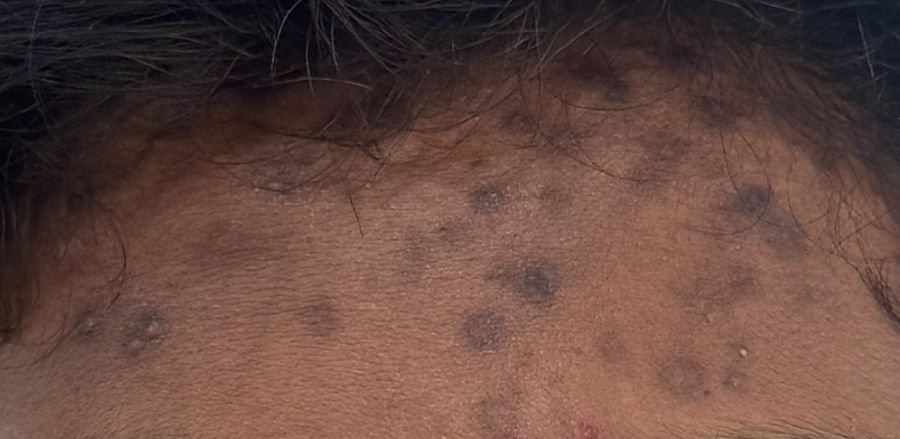
Post-inflammatory marks
Flat brown or red patches left after a lesion heals. Not scars at all, and often mistaken for them. Many fade with pigment-directed treatment and strict sun protection.
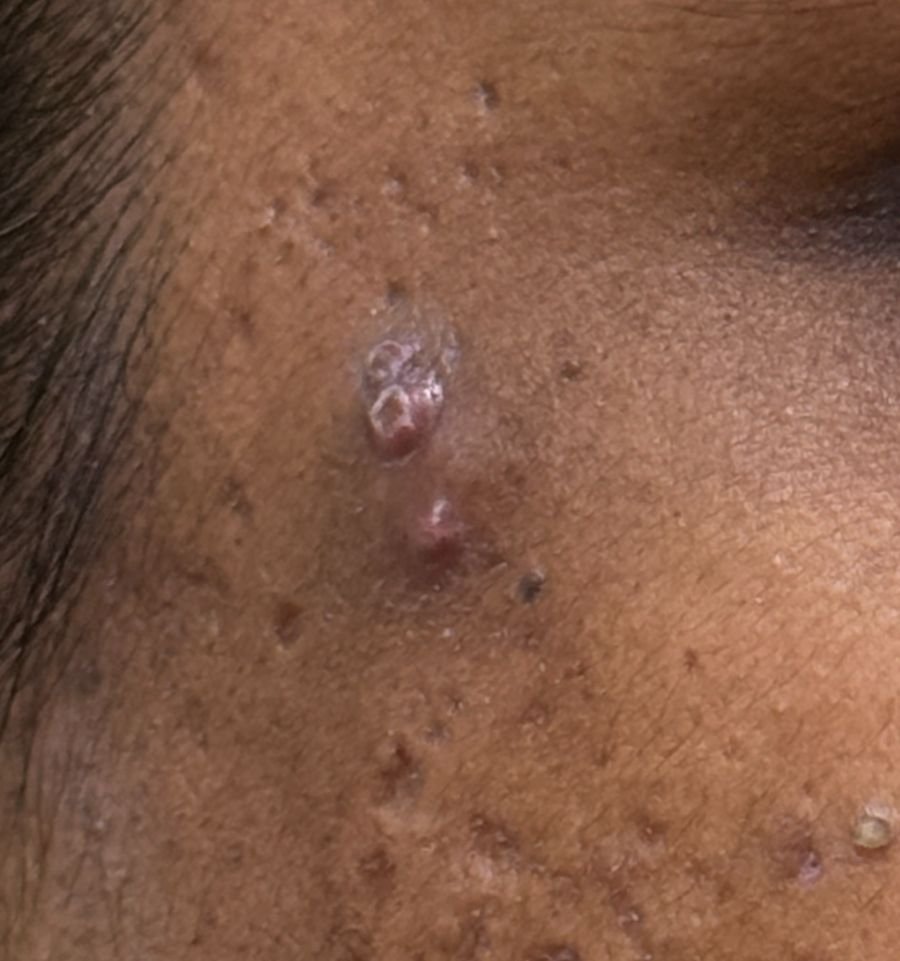
Hypertrophic and keloid scars
Raised, firm scars from excess collagen, more common on the chest, shoulders and jawline. Managed with intralesional injections rather than resurfacing.
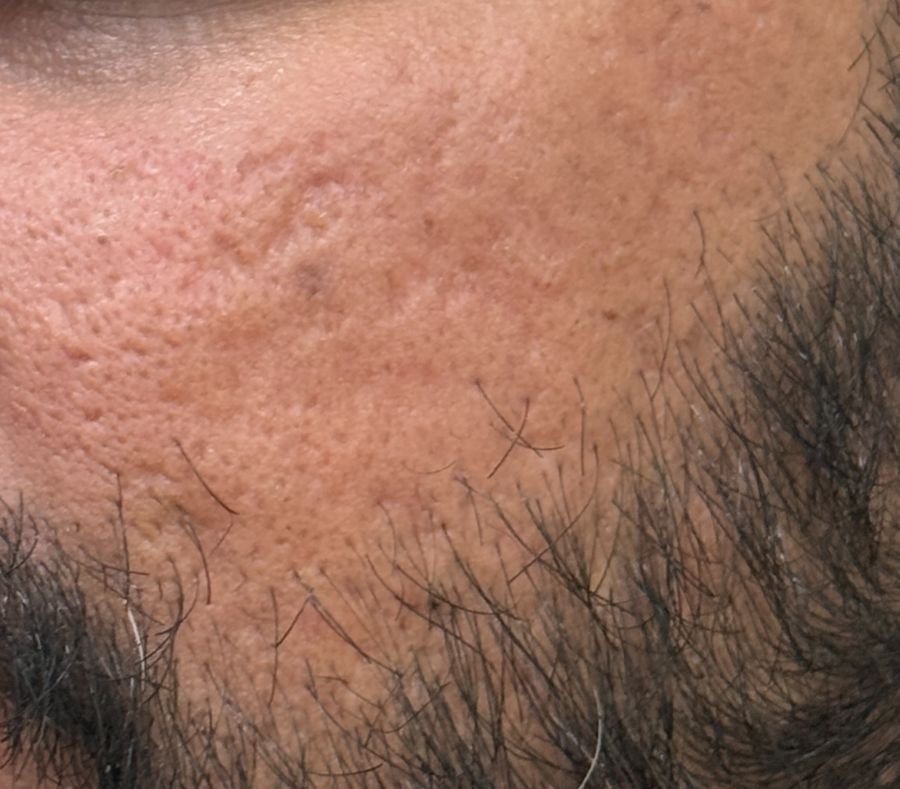
Enlarged pores and texture
Not scarring, but frequently the concern underneath the complaint. Improves with collagen-stimulating treatment and oil control rather than aggressive resurfacing.
Tools chosen for the scars
Most plans combine two or three of these over three to six months, sequenced so each builds on the last.
Subcision
A fine instrument passed under the scar to cut the fibrous bands tethering it down. The essential first step for rolling and tethered scars, which resurfacing alone cannot lift.
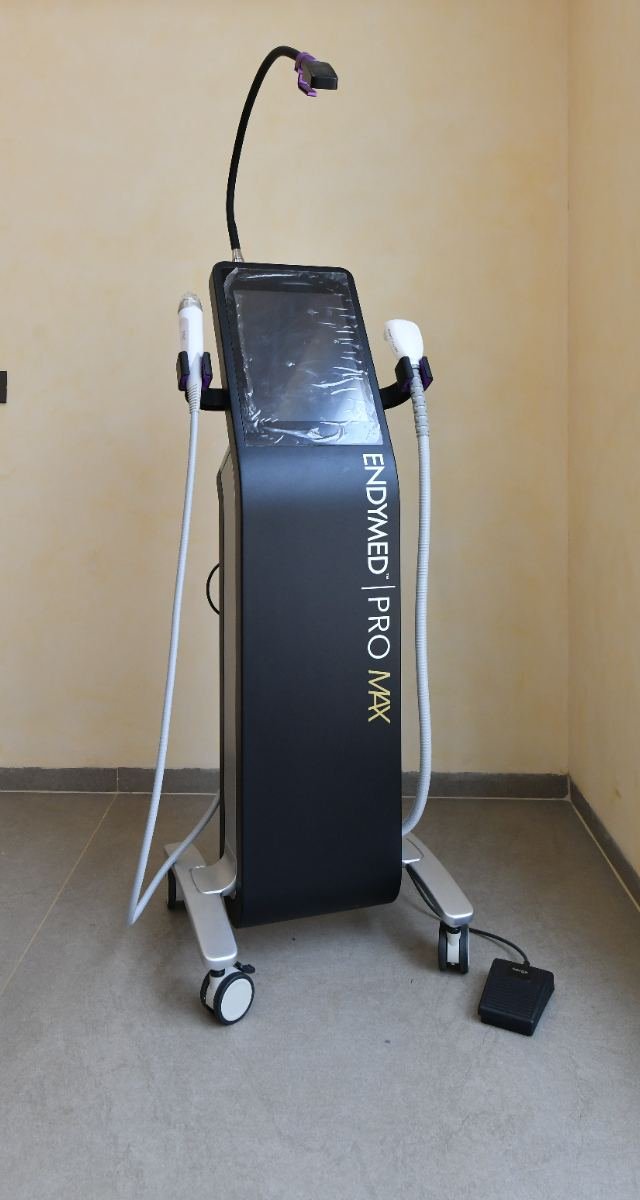
Microneedling RF
Insulated needles deliver radiofrequency energy into the dermis, remodelling collagen with far less surface injury than ablative lasers. Well suited to deeper skin types.
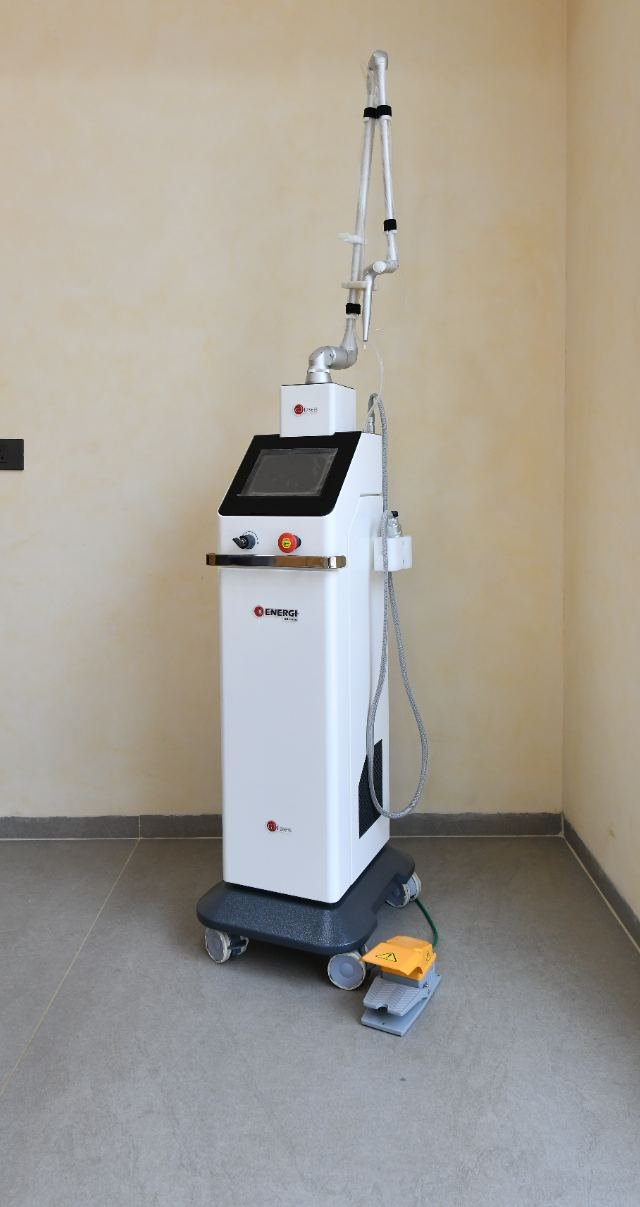
Fractional CO₂ laser
Controlled columns of ablation that trigger dermal remodelling. Effective for boxcar scars and overall texture, with settings adjusted carefully for Indian skin.
Fillers and skin boosters
Used selectively to lift persistent depressions that remain after remodelling, where structural volume rather than collagen is the limiting factor.
Laser toning
Pigment-directed laser at conservative settings for post-inflammatory marks and dullness, run alongside the structural scar work.
Medical peels
Medical-grade peels chosen for skin type, for pigment, congestion and surface texture, started conservatively and built up.
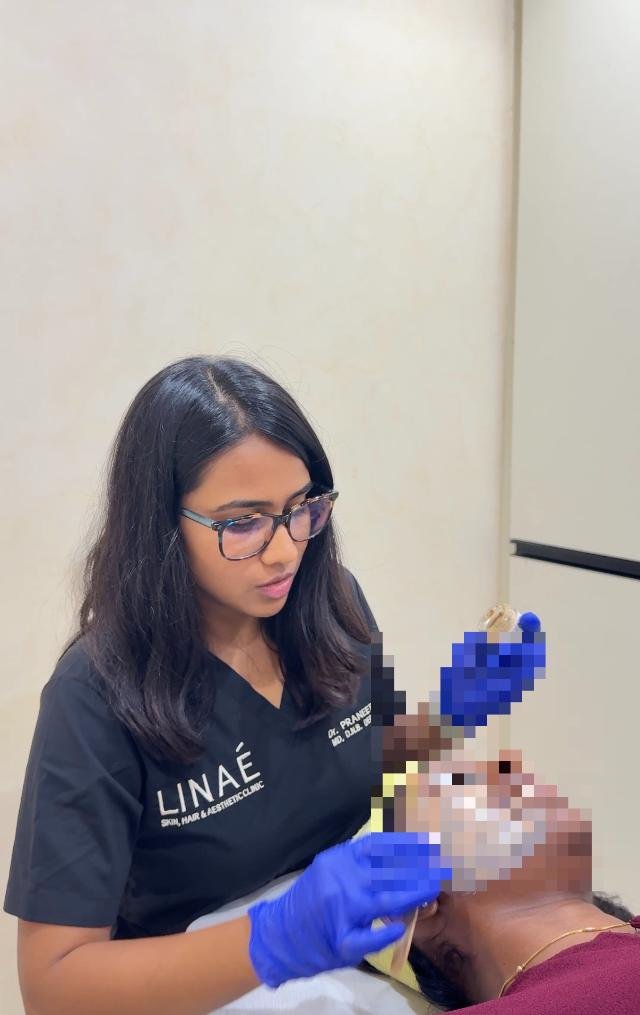
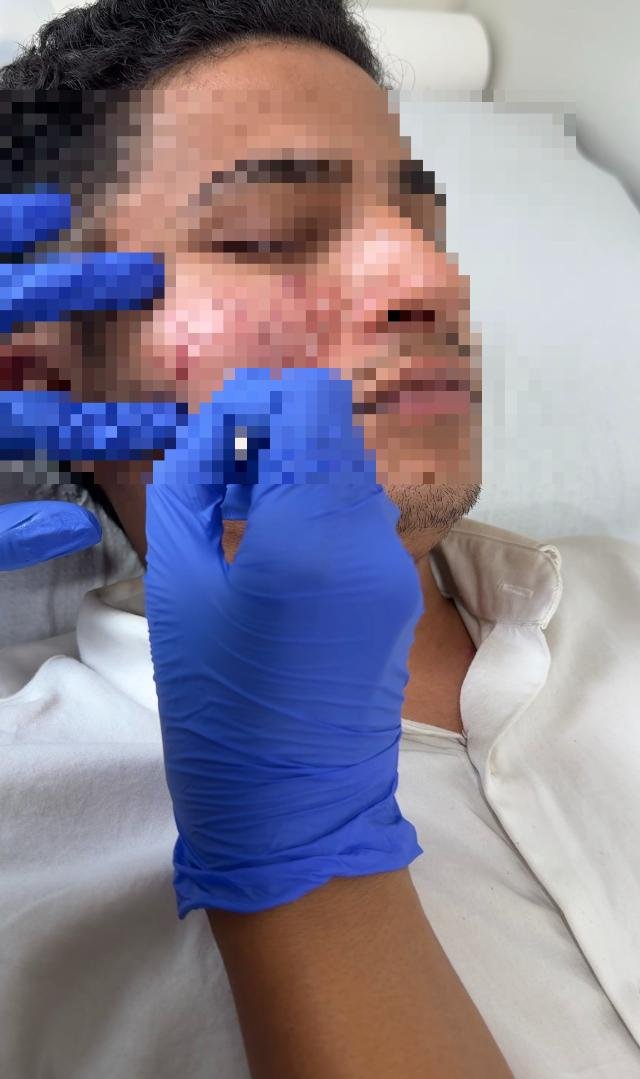
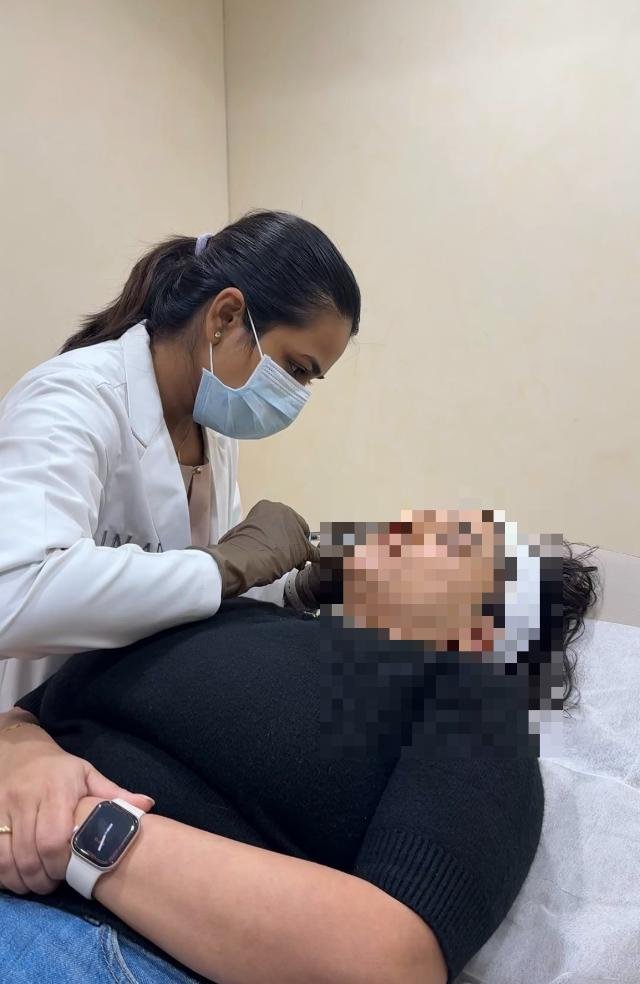
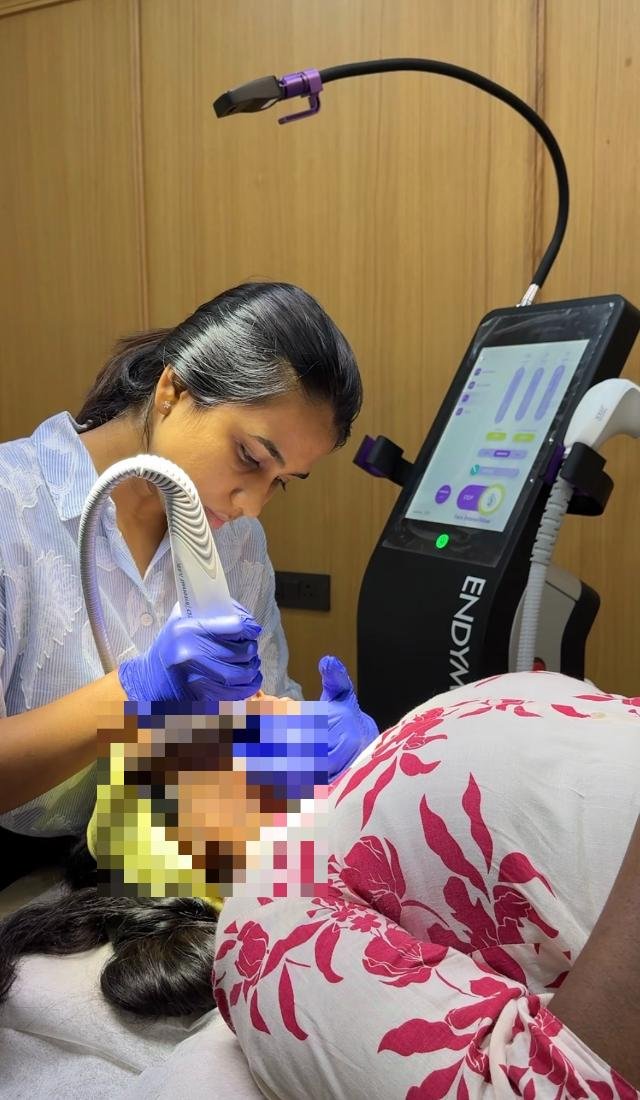
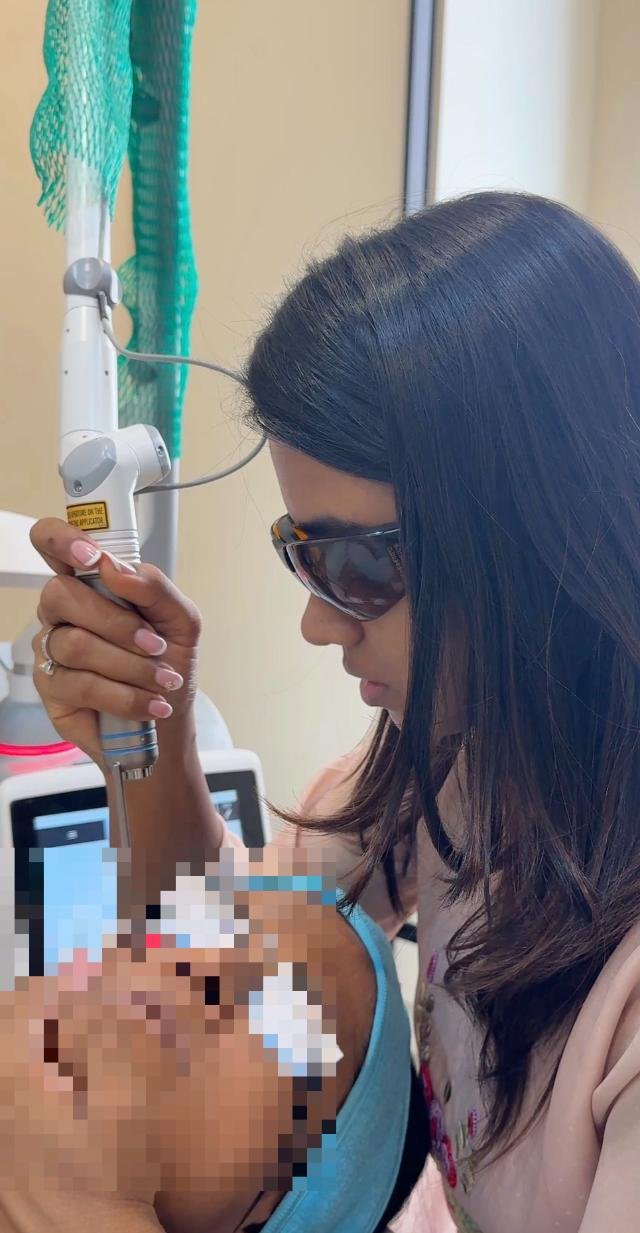
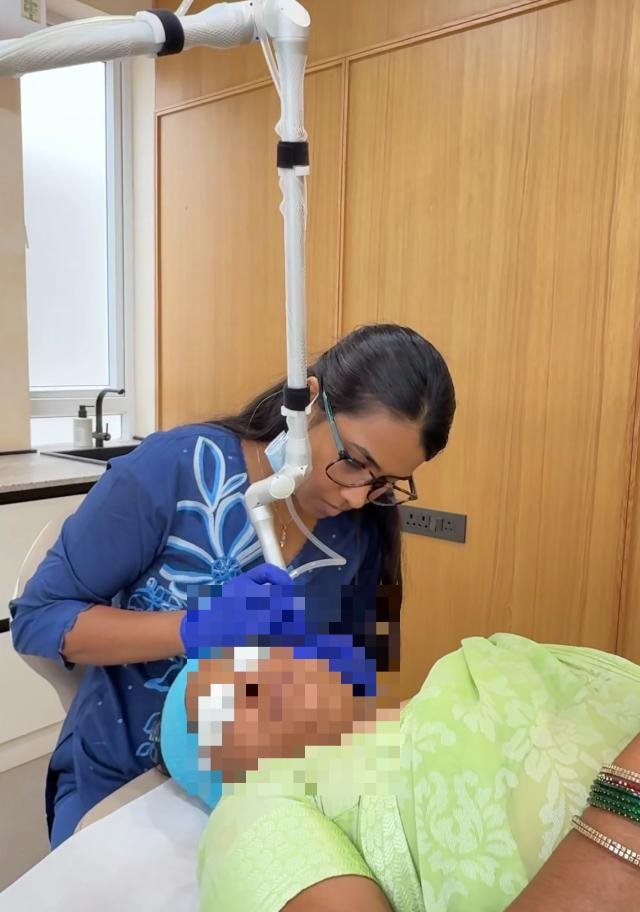
Performed by the doctor, not handed to a technician
Dr. Praneeta Jain performing treatments at Linaé. Patient identity is obscured, and photographs are shared with consent. Swipe to see more.
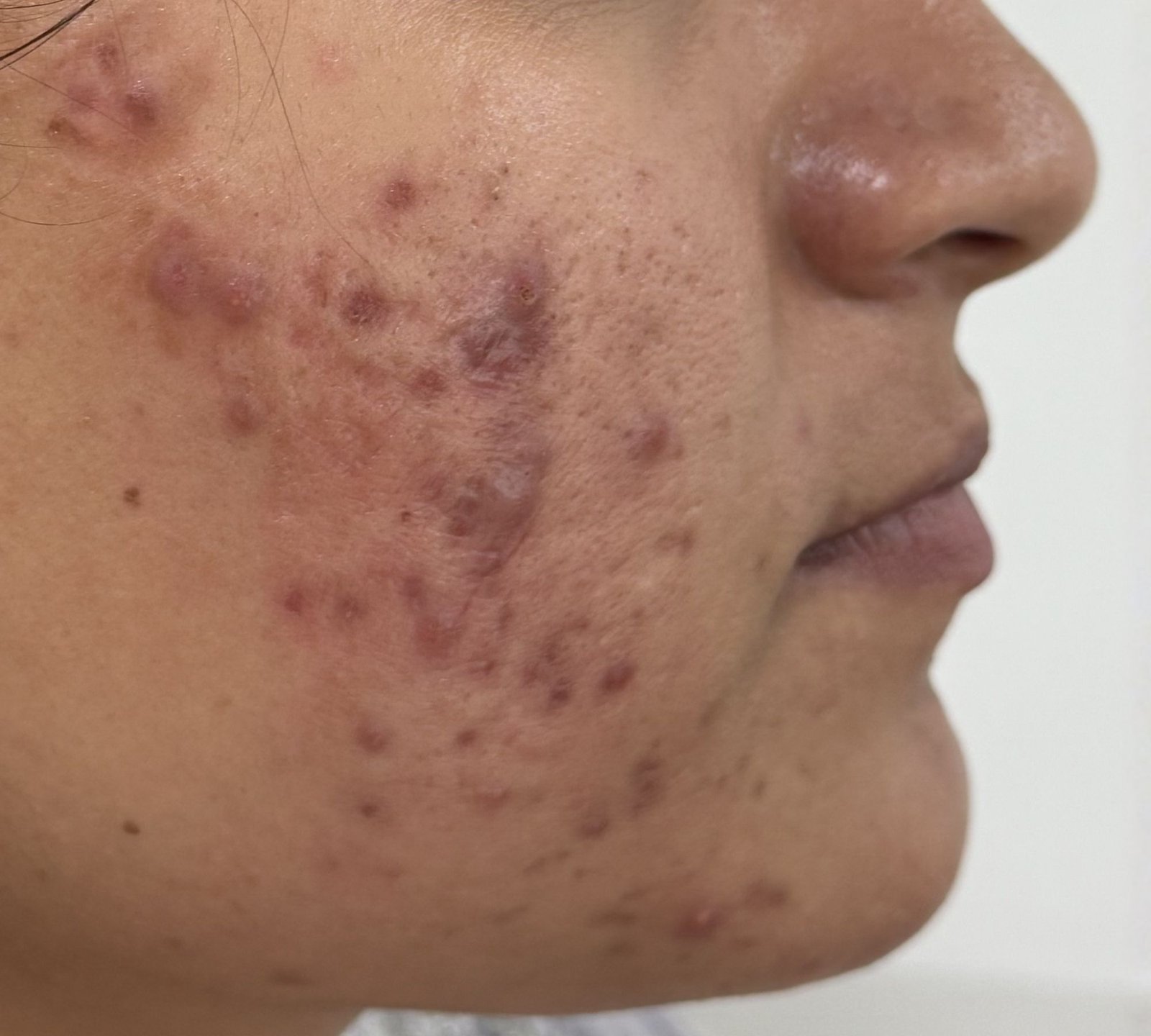
Acne results, documented honestly
Actual patients treated at Linaé, cropped to protect privacy. Drag the handle to reveal the after. No filters, no flattering lighting.
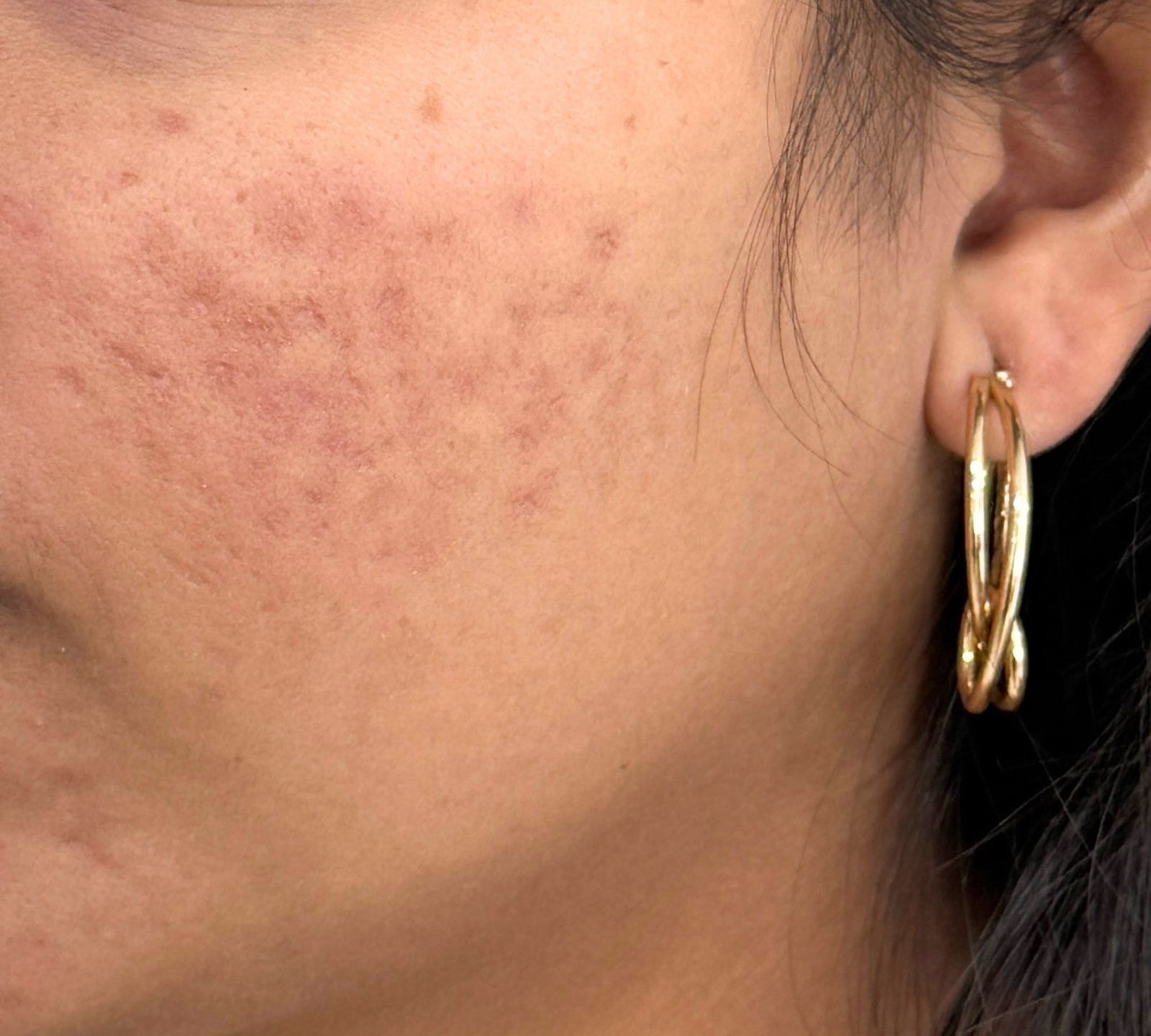 BEFORE
AFTER
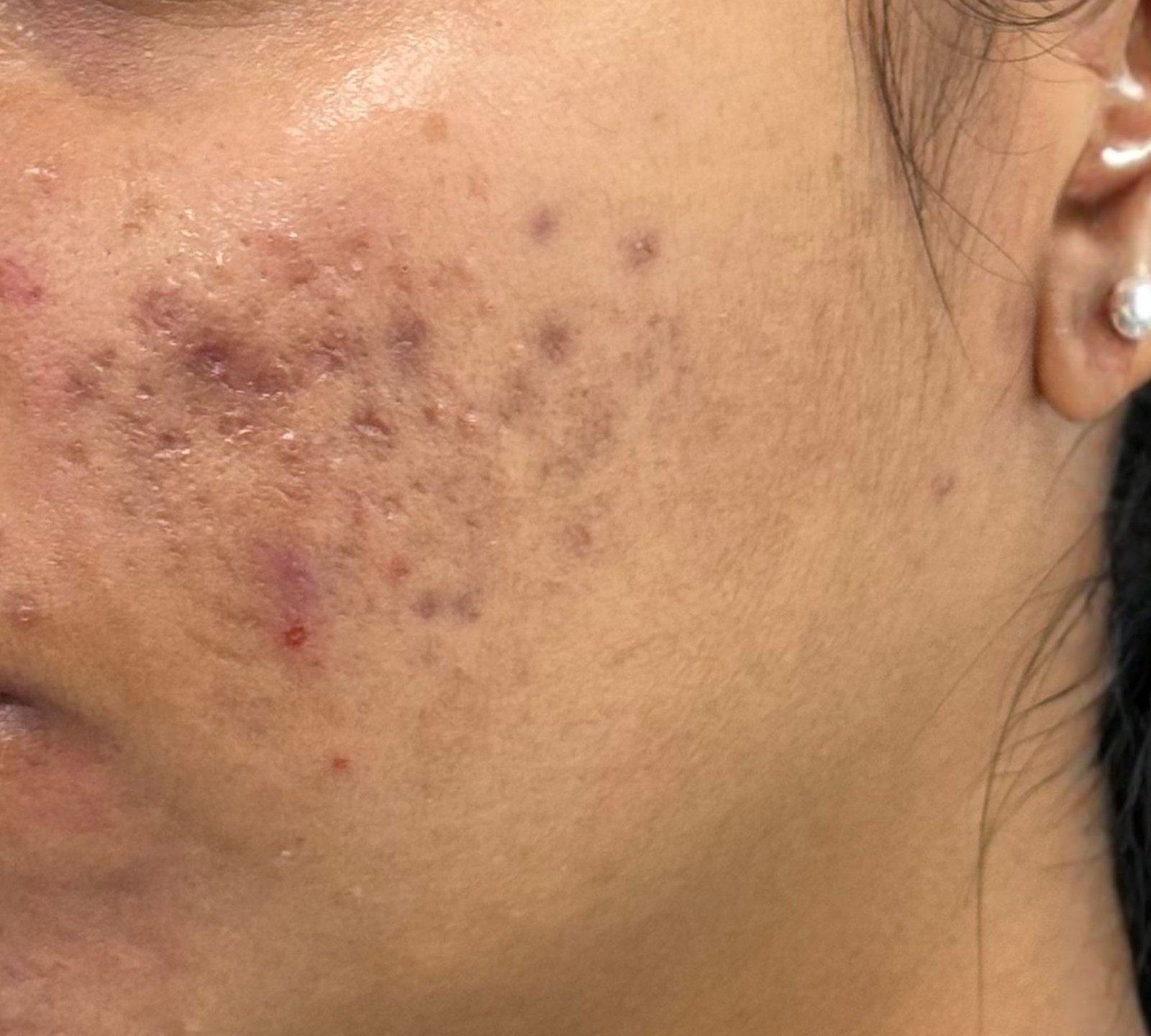
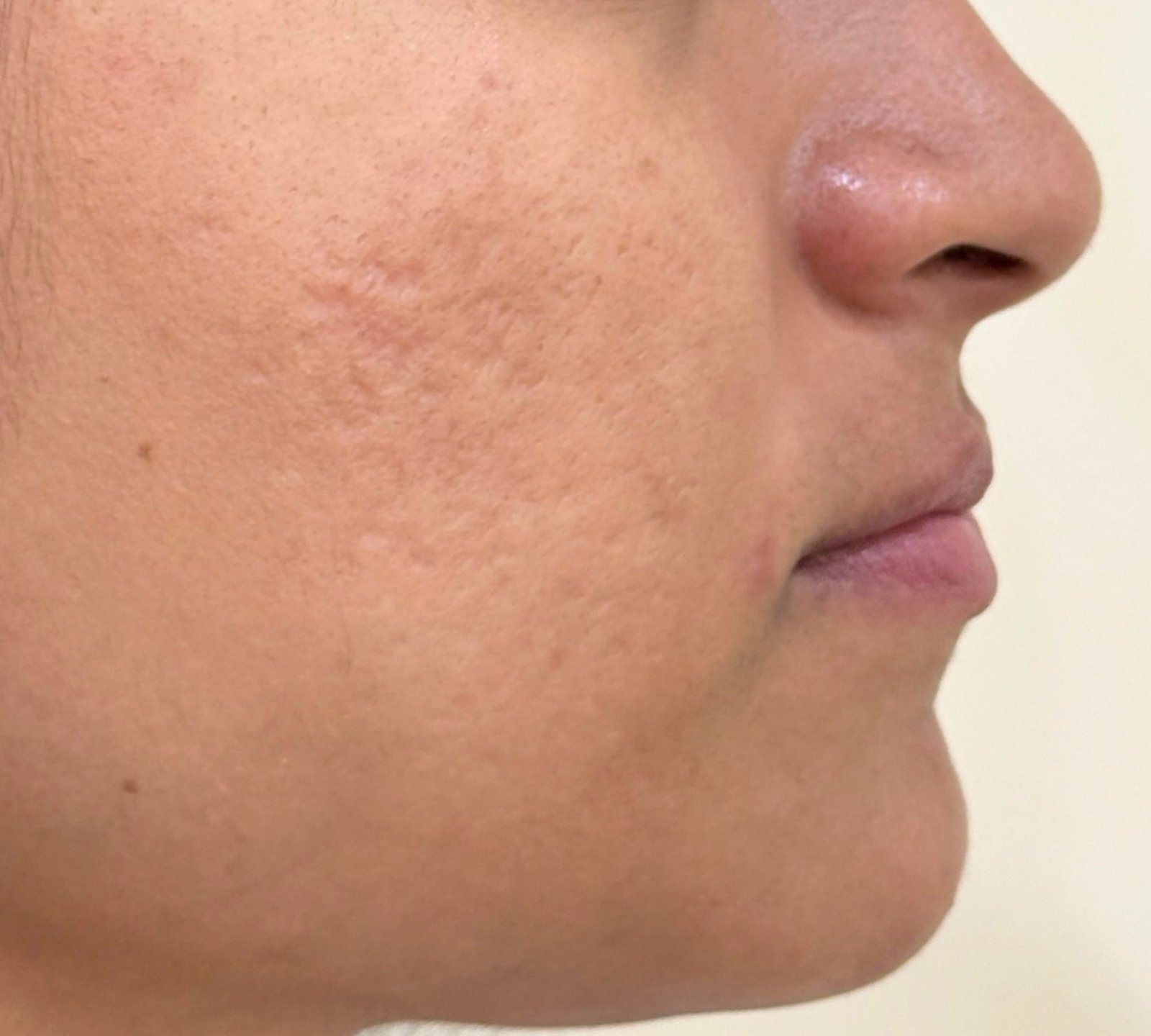 BEFORE
AFTER
Frequently asked
Can acne scars be completely removed?
Honestly, no. Scars can be substantially improved, often by 60 to 80 per cent, but no treatment returns skin to exactly what it was before. Any clinic promising complete removal is overselling. What is realistic is skin that no longer draws attention to itself in normal light.
How many sessions will I need?
Most scar plans run four to six sessions spaced four to six weeks apart, so three to six months in total. Deeper ice pick and tethered scars need more. The number depends on scar type and depth, which is why it is quoted after examination rather than over the phone.
Should I treat active acne or scars first?
Active acne first, always. Treating scars while breakouts continue means new scars form as old ones are being corrected, and inflamed skin responds poorly to resurfacing. Once acne is controlled medically, scar work begins on stable skin.
Is CO₂ laser safe for Indian skin?
Yes, with correct settings and pre-treatment preparation. Indian and other deeper skin types carry a genuine risk of post-inflammatory hyperpigmentation, so energy, density and aftercare are adjusted accordingly, and skin is often primed for a few weeks beforehand.
Does scar treatment hurt?
Topical anaesthetic is applied before microneedling RF, subcision and laser resurfacing, so the procedure itself is tolerable. Expect redness and a sunburn-like feeling for two to four days afterwards, depending on the procedure.
Have your scars actually assessed.
A consultation establishes which scar types you have and what combination will realistically improve them, with an honest timeline.